
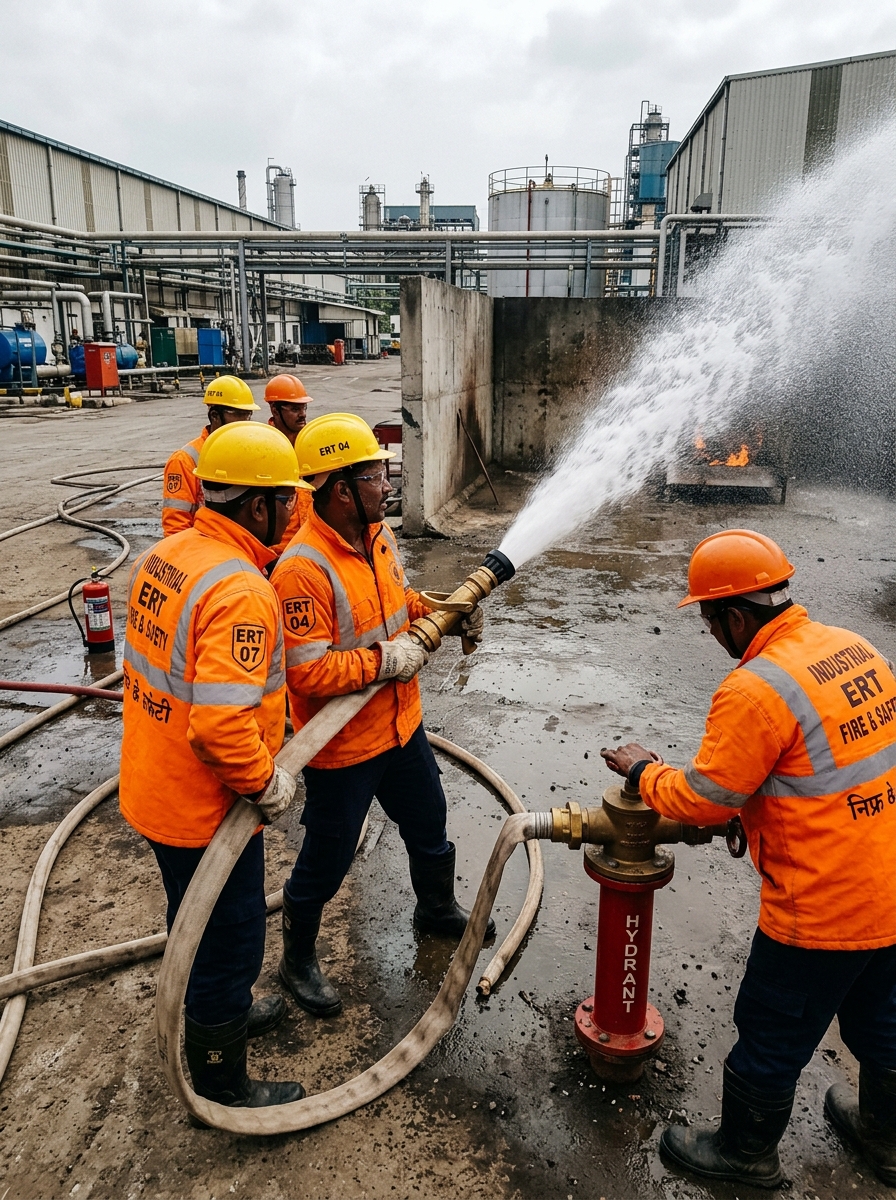
Hydrant Operation Training
Practical technical training on the safe deployment, coupling, and pressure control of internal and external fire hydrant systems.
Who it is for
Facility maintenance teams, safety officers, ERT personnel, security teams, and engineering crew.
What you will learn
- Understand the layout and operation of fixed fire fighting hydrant rings and wet risers
- Safely unreel, connect, and handle fire hoses under system pressure
- Operate branch pipe nozzles effectively (jet, spray, and fog modes)
- Inspect hydrant valves, landing valves, and hose boxes for operational readiness
Objectives are proposed syllabus content, shared for your review and adjusted to your facility.
Topics covered
- 1Wet riser systems, pressure regulation, and jockey pump operations
- 2Hose deployment techniques: straight roll, flaking, and rapid coupling
- 3Branch pipe handling, counteracting recoil forces, and team nozzle control
- 4Post-operation draining, drying, and hose re-stowing protocols
Practical activities
- Hands-on coupling of delivery hoses to landing valves
- Live or pressurised branch pipe handling with partner bracing stance
- Inspection checklist audit of on-site fire hose reels and landing stations
Delivery and site needs
Delivery arrangements
Venue and delivery arrangements are confirmed during enquiry.
Site space and clearance
Operational on-site hydrant system with adequate water supply and drainage clearance for test flow.
Frequently asked questions
Does this programme require our facility hydrant system to be operational?
Related programmes
Basic Fire Safety Training
Foundational fire awareness covering the chemistry of fire, workplace hazard recognition, emergency alerting, and practical portable extinguisher operation.
Evacuation Mock Drill
Structured planning, execution, timing, and comprehensive post-drill evaluation of a full or partial facility emergency evacuation exercise.
SCBA Training
Comprehensive training on the pre-use inspection, donning, cylinder pressure monitoring, and operational safety of Self-Contained Breathing Apparatus.