
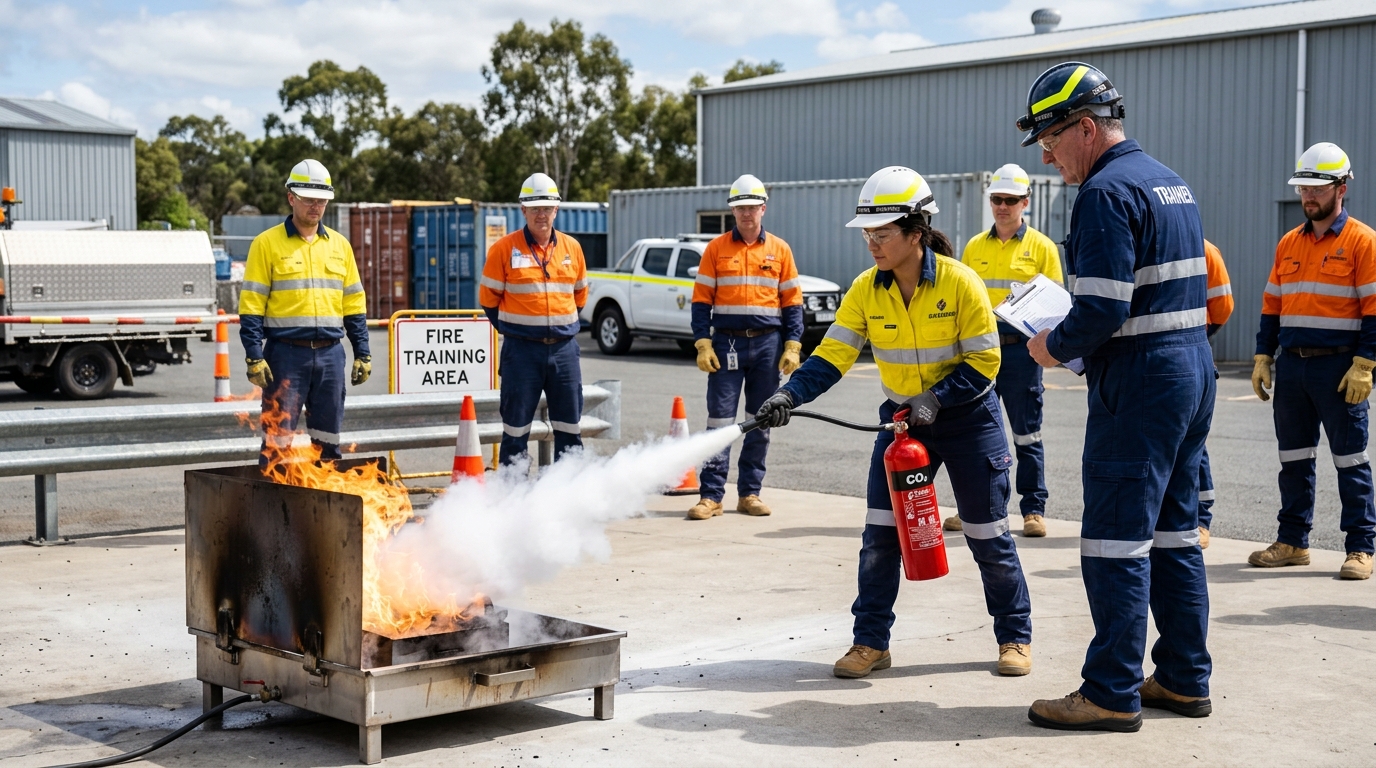
Basic Fire Safety Training
Foundational fire awareness covering the chemistry of fire, workplace hazard recognition, emergency alerting, and practical portable extinguisher operation.
Who it is for
General workforce, administrative personnel, floor marshals, and newly onboarded employees across all facility types.
What you will learn
- Understand the fire triangle and primary mechanisms of combustion
- Recognise common workplace fire ignition sources and combustible accumulations
- Identify classes of fire (A, B, C, D, and electrical) and appropriate extinguishing media
- Execute the PASS technique for operating portable fire extinguishers safely
- Follow workplace alarm notification and initial emergency reporting sequences
Objectives are proposed syllabus content, shared for your review and adjusted to your facility.
Topics covered
- 1Chemistry of fire and stages of combustion
- 2Classification of fires and selection of appropriate fire extinguishers
- 3Safe distances and windward positioning during fire attacks
- 4Immediate actions upon detecting smoke or open flame
- 5Escape route awareness and assembly area discipline
Practical activities
- Walkthrough inspection of portable fire extinguishers, pressure gauges, and seals
- Supervised discharge demonstration using water/CO2/dry powder simulators
- Emergency notification announcement roleplay
Delivery and site needs
Delivery arrangements
Venue and delivery arrangements are confirmed during enquiry.
Site space and clearance
Safe open outdoor courtyard or designated demonstration area with adequate clearance for extinguisher deployment.
Frequently asked questions
How often should basic fire safety training be conducted for employees?
Does this session include hands-on fire extinguisher discharge?
Related programmes
Evacuation Mock Drill
Structured planning, execution, timing, and comprehensive post-drill evaluation of a full or partial facility emergency evacuation exercise.
SCBA Training
Comprehensive training on the pre-use inspection, donning, cylinder pressure monitoring, and operational safety of Self-Contained Breathing Apparatus.
Hydrant Operation Training
Practical technical training on the safe deployment, coupling, and pressure control of internal and external fire hydrant systems.