
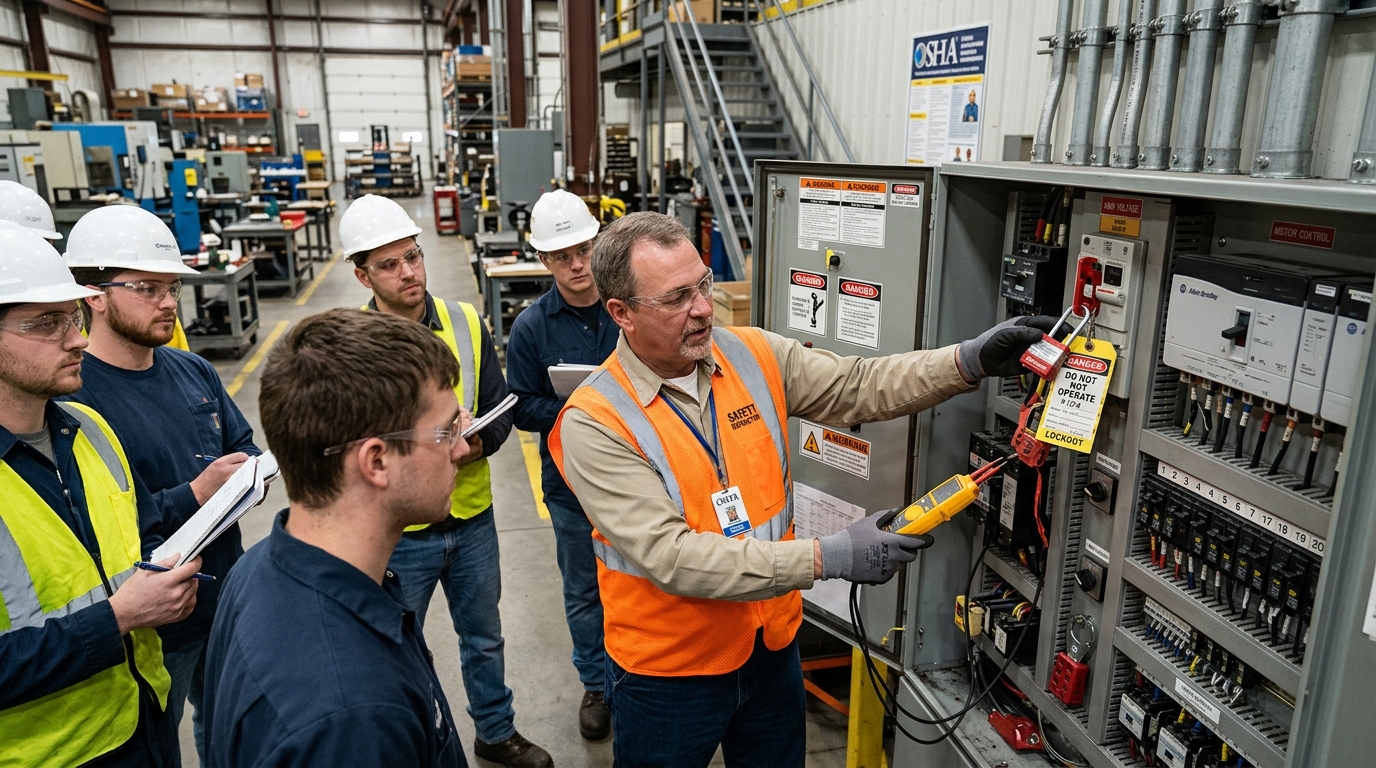
Electrical Risk Assessment
A thorough technical evaluation of electrical infrastructure, distribution networks, switchboards, earthing systems, and operational practices to identify shock, fire, and flashover hazards.
Purpose of the assessment or study
To identify electrical installation vulnerabilities, earthing inadequacies, switchgear deterioration, and operational hazards to safeguard personnel, protect capital assets, and mitigate electrical fire risks.
Applicable facility types
Industrial manufacturing plants, IT parks, data centres, corporate towers, hospitals, commercial complexes, and high-voltage substations.
Proposed study scope
Substations, transformers, HT/LT switchgear panels, motor control centres (MCC), power distribution boards, earthing pits, lightning protection systems, cable trays, and electrical maintenance procedures.
Scope is structured as a technical proposal framework for client review and adjusted to your facility layout.
Methodology overview
Visual inspection of panels, single-line diagram (SLD) verification, earthing continuity and pit resistance testing oversight, review of breaker ratings vs. connected loads, inspection of PPE and insulated tools, and assessment of Lockout/Tagout procedures.
Client inputs and site visit arrangements
Information required from client
Electrical Single Line Diagrams (SLD), connected load lists, earth pit test reports, transformer test records, maintenance logs, and electrical layout drawings.
Site visit arrangements
Access to transformer yards, HT/LT switchboard rooms, distribution risers, and rooftop lightning arrestors during scheduled daytime hours.
Indicative deliverables
Detailed Electrical Risk Assessment report, earth pit resistance status register, panel-by-panel hazard observation list with risk ratings, and prioritized mitigation roadmap, subject to agreed scope.
Frequently asked questions
Is thermal imaging / thermography included in an electrical assessment?
Related assessment services
Fire Risk Assessment
A comprehensive assessment of facility fire ignition sources, fuel loads, means of escape, compartmentation, detection systems, and emergency fire-fighting arrangements.
Fire Load Calculation
Engineering assessment and quantitative calculation of the total heat energy that would be released by combustible materials in a defined building space or industrial compartment.
Hazard and Operability Study (HAZOP)
A structured, systematic examination of planned or existing process designs using standardized guide words to identify operational deviations, potential hazards, and protective safeguards.